
How to Change: Investigating What Makes Changes Sustainable
Updated: Jul 25
Have you ever noticed that the harder you try to change, the more exhausting it becomes?
Many of us have been taught that transformation comes through discipline, pressure, and sheer determination. We tell ourselves to try harder, push further, and be more productive. When our new habits don't last, it's easy to conclude that we're simply not disciplined enough; that somehow we're broken, inconsistent, or incapable.
But what if the problem isn't your determination?
What if it's the way you've been taught to approach change?
In nature, nothing truly flourishes because it was forced. A tree doesn't grow because someone pulls on its branches. A flower doesn't bloom because it's criticized into opening. Growth happens because the conditions allow it to... Perhaps we're not so different.
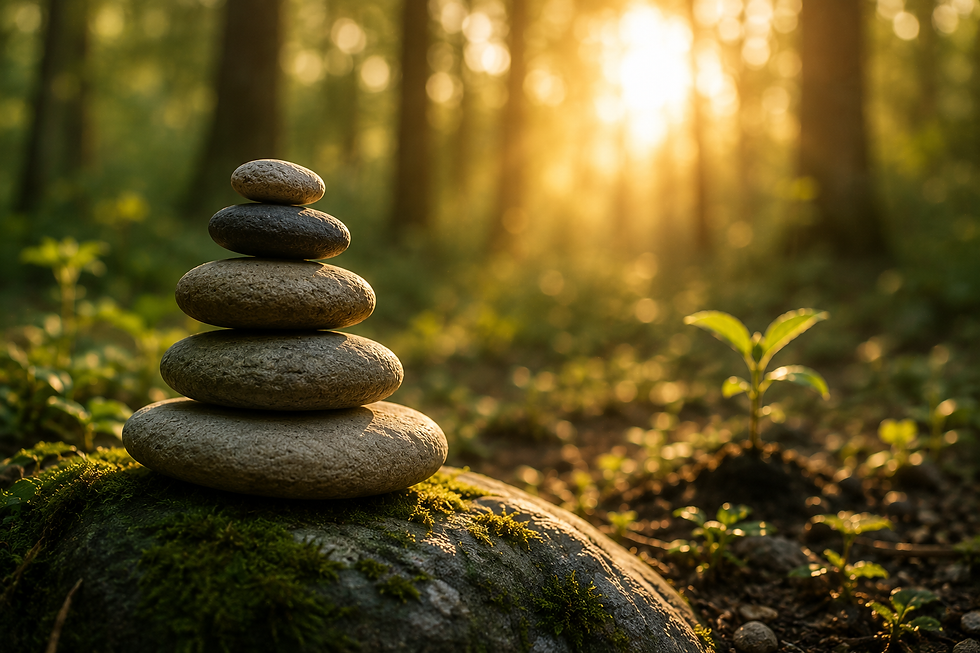
Curiosity: The First Spark of Illumination
Sustainable change rarely begins with a dramatic breakthrough.
More often, it starts quietly with a tough question, a moment of silence that allows us to see something we had been avoiding, or a moment where we stop arguing with ourselves long enough to wonder, "What else could be true?"
Curiosity is powerful because it loosens the grip of certainty. It creates space between who we believe we are and who we might become.
When we approach ourselves with curiosity instead of critical judgment, we stop treating our thoughts as permanent facts. New possibilities begin to emerge. We don't have to force them into existence, they naturally start to show up after we finally made room for them by challenges our old beliefs. Curiosity is the first spark of illumination in a mind that has been sitting in the dark.
Why Force Doesn't Create Lasting Change
Imagine trying to help a young plant grow by pulling on its stem. You might lift it higher for a moment, but you'd also damage the very thing you were hoping to help. Many of us unknowingly treat ourselves the same way.
We shame ourselves into productivity.
We criticize ourselves into healthier habits.
We pressure ourselves into becoming "better."
Sometimes those strategies produce results... for a little while. However, they rarely create a life we actually enjoy living. Pressure can sometimes create movement, but it rarely creates sustainability. When growth is fueled entirely by fear, perfectionism, or restless willpower, it often becomes something we have to survive instead of something we get to experience. When we relentlessly force ourselves forward with dirty fuel, we burn out. We don't trust ourselves to make a foundational shift because we feel everything might fall apart. When in reality, if we change the fuel to be better for us, we will still keep going forward and do it happily.
The Speed Paradox
One of the greatest surprises I've encountered is that people often grow fastest when they stop insisting they must grow fast. Yes, it sounds backwards. Yet anyone who has tried to rush healing, relationships, or personal growth has probably experienced this paradox firsthand. Growth accelerates when pressure relaxes. One simple way to experience this shift is by changing the language you use with yourself.
Instead of saying,
"I should work out."
Try asking,
"What kind of movement would help me feel healthier in the long run?"
Instead of,
"I have to meditate."
Try something like,
"I want to create a little more peace in my day, what might that look like."
The difference may seem small, but it changes your relationship with the action. One comes from obligation. The other comes from intention.
The Architecture of Growth
Every thriving garden depends on balance. Too much sunlight without water causes plants to wither. Too much water without sunlight weakens their growth. Our minds are no different.
I like to think of sustainable change as requiring two essential elements:
The Light of Clarity
Before we can move confidently, we need to understand what we're stepping toward, and what we're stepping on. Clarity reduces unnecessary fear because it helps us see the next step instead of imagining every possible obstacle.
The Waters of Discipline
Discipline doesn't have to be punishment, it's nourishment of what matters to you. In practice, it's the repeated act of showing up... not perfectly, but consistently.
Clarity helps us know where to grow. Discipline gives us the opportunity to keep growing. Neither is enough on its own. Together, they create the conditions where lasting change becomes natural.
A Garden Is Never Finished
Perhaps my favorite lesson from gardening is that healthy gardens are never perfect.
There are always weeds, branches to prune, pieces nibbled off by woodland creatures. There are also always seasons where the garden looks less impressive than others. Yet we don't declare a garden ruined because we missed one afternoon of weeding. We simply return tomorrow.
I think we deserve to treat ourselves with that same patience. You are in a lifelong relationship with your mind. One difficult day doesn't erase months of progress.
One setback doesn't undo the deeper shifts you've been making. Growth isn't measured by some end state of perfection. It's measured by your willingness to keep coming back.
Becoming an Observer
Change can be a challenge because of internal resistance. However, that resistance isn't always the enemy. Sometimes it's simply a protective part of us trying to keep us safe. Rather than immediately trying to eliminate uncomfortable emotions, we can begin by witnessing them. When we quietly notice our fear, frustration, or self-doubt without rushing to "fix" it, something interesting often happens.
The intensity of these feelings begins to soften.
Those thoughts drift like clouds, creating space.
Within that new space lives choice.
Instead of reacting automatically, we become free to respond intentionally. Healing often begins, or deepens, not when we try to force change on our emotions... but when we stop fighting them. When we welcome them, and witness them, and acknowledge them, before redirecting them.
Your Next Step Doesn't Need to Be Big
Every forest begins with a single seed. That seed does not need to force itself to become a tree... it simply receives enough light, enough water, and enough time. Perhaps your next chapter doesn't require becoming someone new. Alternatively, you could simply be more curious about who you've been all along.
So today, instead of asking yourself,
"How can I force myself to change?"
Try asking,
"What would help me grow?"
Because here in the Golden Grove, we believe something simple:
When we grow ourselves, the world grows with us.
Thanks for reading!
If you would like to see whether Golden Grove Coaching could be a good fit for you:


